
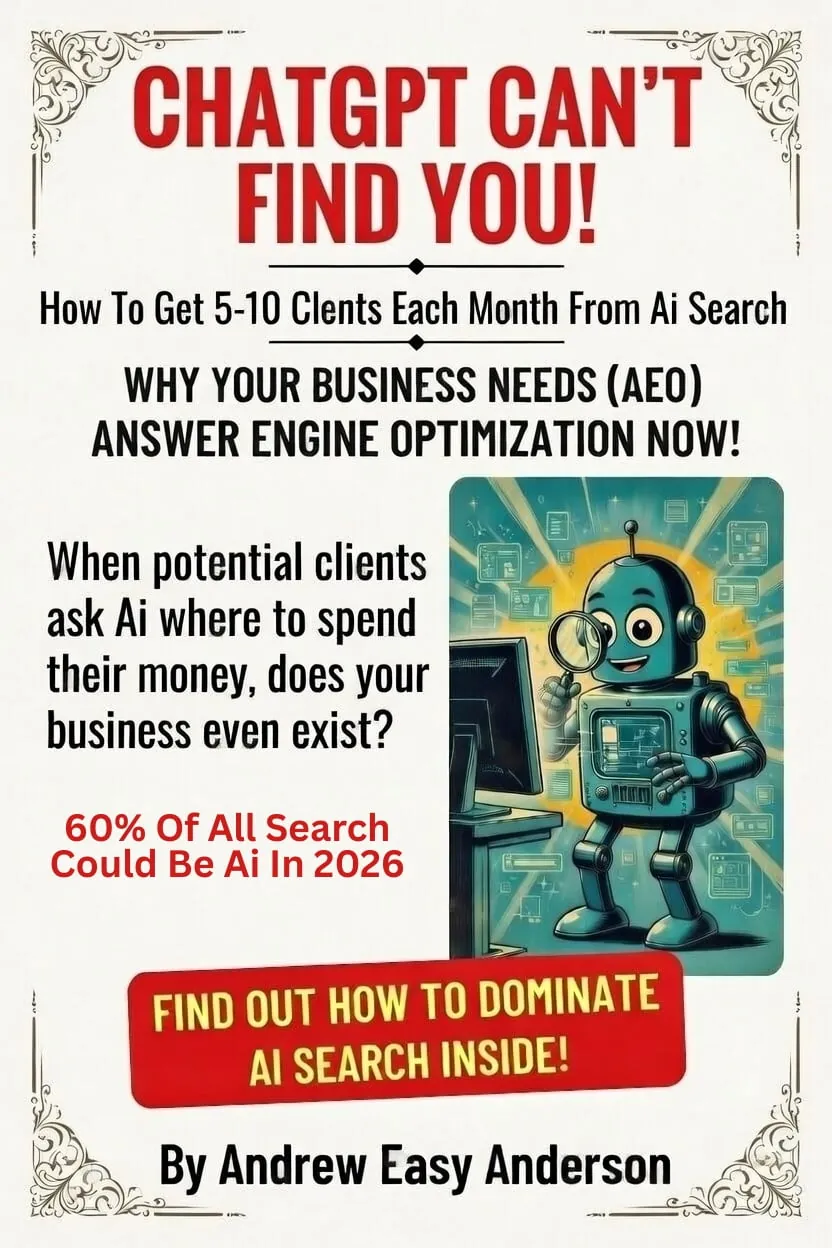
How to Get AI to Recommend Your Local Business and Consistently Send You 5-10 New Customers Per Month… Without Ads, SEO Agencies, or Guesswork.
The uncomfortable truth about local marketing in 2026
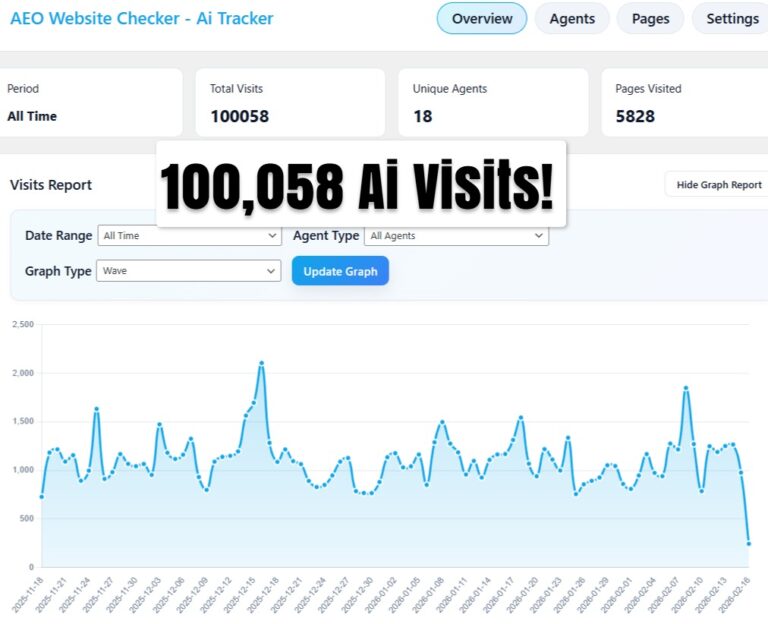
These AI visits are from one of our clients from the afternoon of November 19, 2025, until February 16, 2026, at 9:20 AM. They are getting around 1,000 Ai visits daily now!
How many are you getting? cddd

Your won’t be angry at me. You will be angry at every marketing “expert” who’s been taking your money while the ground shifted beneath your feet because of AI.
Here’s what happened while you weren’t looking:
Someone in your city — right now, probably within the last hour — opened ChatGPT, Google Gemini, Grok, or Perplexity and typed something like:
“Who’s the best plumber near me?”
“I need a really good chiropractor in [your city]?”
“Who is a good roofer, I have a big leak — who should I call?”
“I just had a fender bender, I need a good attorney”
” Who is a really good (fill in your niche)?”
And AI gave them an answer.
It wasn’t you.
Not because you’re bad at what you do. Not because your competitor is better. But because AI doesn’t know you exist.
Let that sink in for a second.
You could be the most skilled, most experienced, most reviewed business in your entire zip code — and AI will recommend someone else because they figured out this game before you did.
That’s not a theory. That’s happening right now. Today. In your market.
SEO searchs now have 60% of them not resulting in a Click!
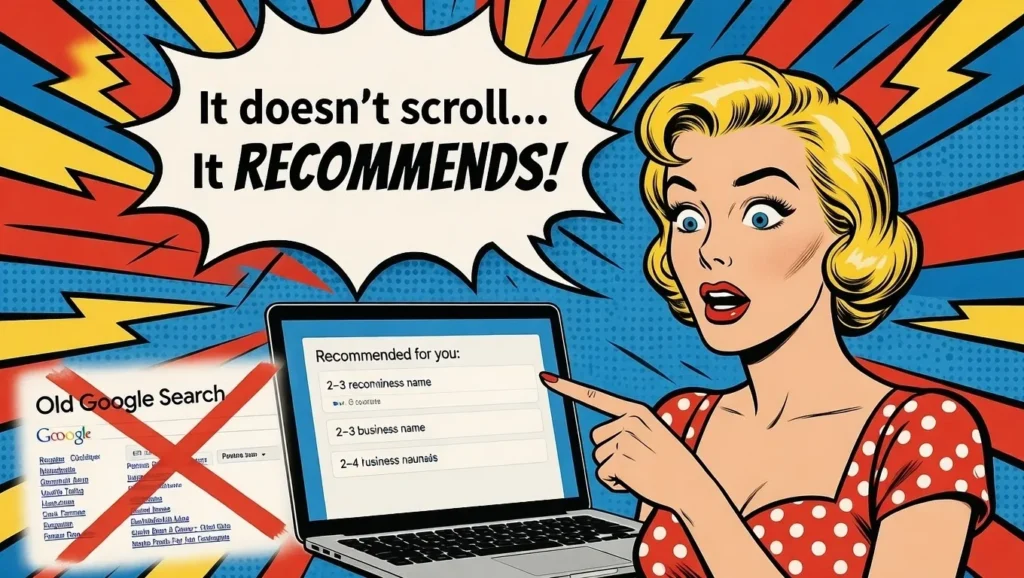
AI doesn’t search the internet the way your customers used to.
It doesn’t scroll through 10 blue links. It doesn’t click on ads. It doesn’t “browse.”
It recommends.
One business. Maybe two. Occasionally three.
That’s it. That’s the whole list.
And here’s the brutal math:
If AI recommends three businesses and you’re not one of them — you didn’t land on “page two.” You don’t exist. There IS no page two. There’s the answer, and then there’s everyone else standing in the dark wondering where all the customers went.
It’s like showing up to a party, but your name isn’t on the list. Doesn’t matter how charming you are — the bouncer doesn’t know you, and you’re not getting in.
I know. I hear this every single week.
Business owners come to me and say, “Andrew, I’m ranked #1 or #2 on Google. I’ve got 200 five-star reviews. I’ve got a beautiful website. What do you mean AI can’t find me?”
And I have to be the guy who delivers the bad news.
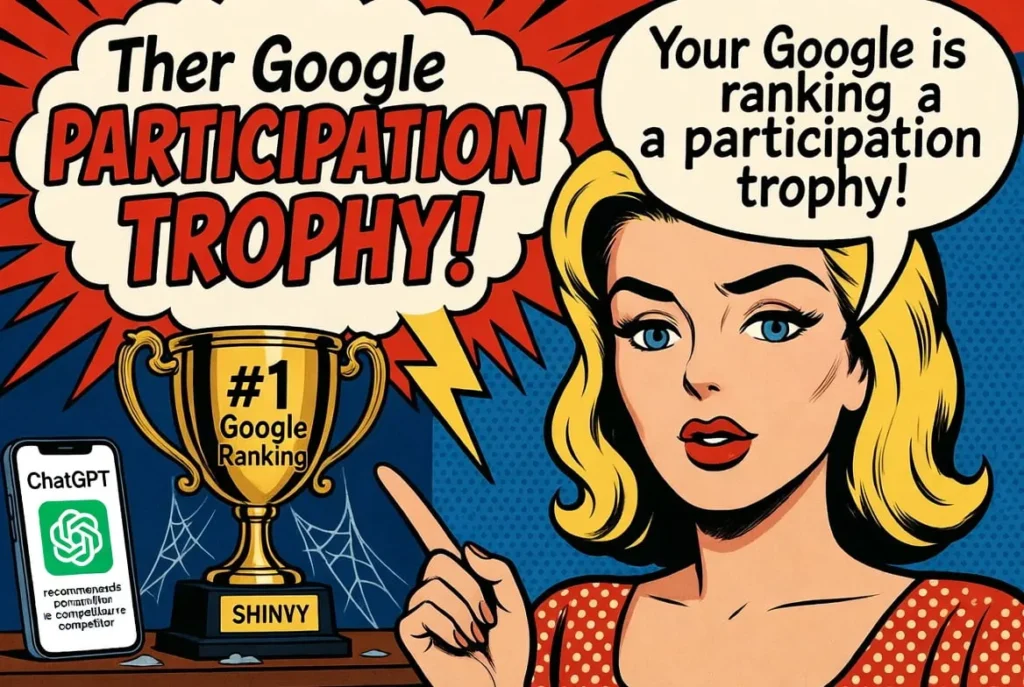
Your Google ranking is becoming a participation trophy.
Not worthless. But less valuable every single month. Here’s why:
When someone asks ChatGPT or Grok for a recommendation, it doesn’t go to Google. It doesn’t check your ranking. It doesn’t care that you paid some SEO agency $3,000 a month to get you to position one.
AI makes its own decisions based on its own criteria. And those criteria are completely different from what you’ve been optimizing for.

Tony owned a plumbing company in Memphis. Spent $4,500 a month on SEO. Ranked #1 for “plumber Memphis” on Google. Tony was feeling pretty good about himself.
Then his leads started dropping. Not a lot at first — maybe 10% one month, another 8% the next. Tony figured it was seasonal. “Things will pick back up,” he told himself.
Six months later, Tony’s leads had dropped 35%. His competitor — a guy Tony used to run circles around — was suddenly booked solid. Tony finally asked a new customer how they found the competitor.
“ChatGPT recommended them.”
Tony is now spending money to fix a problem he didn’t know he had, while his competitor already locked in the advantage. Don’t be Tony.
This is where it gets interesting and where this book gives you an unfair advantage.
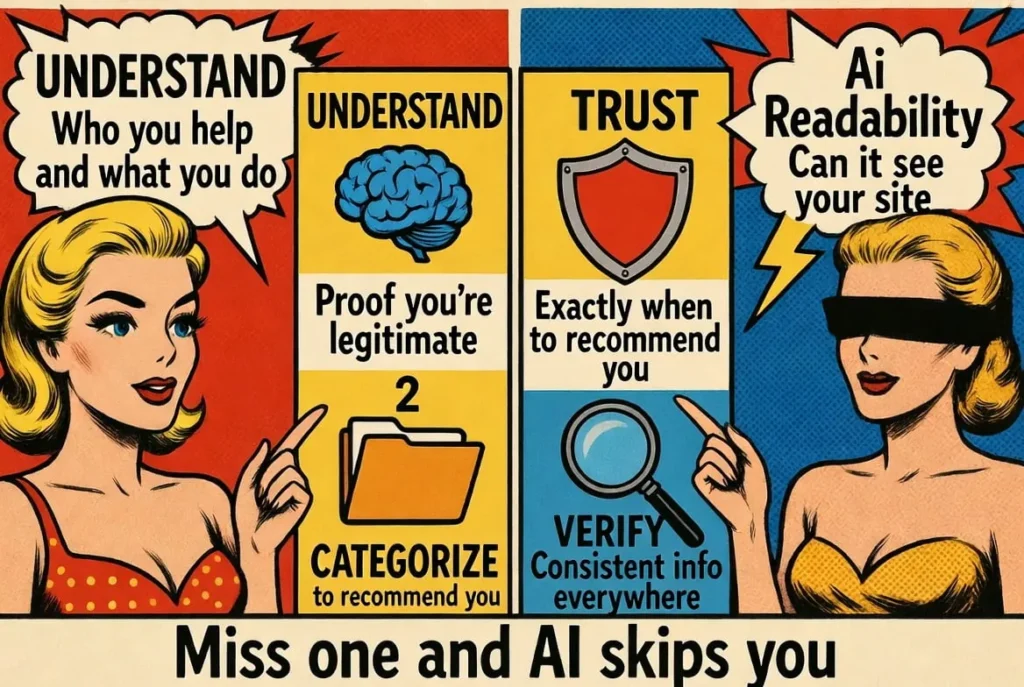
AI only recommends businesses it can do four things with:
1. Understand. AI needs to clearly grasp who you help, what problem you solve, where you operate, and what makes you different. If your online presence is vague, generic, or scattered — AI skips you. It’s not going to guess. It’s not going to dig. It moves on to someone clearer.
2. Trust. AI looks for signals that say, “This business is legitimate and credible.” Not just reviews (though those matter). We’re talking about consistent information across platforms, authoritative content, proper business data, and a digital footprint that says “this is a real, established business.”
3. Categorize. AI needs to put you in a box. A specific box. “General contractor” is too vague. “Licensed residential roofing contractor specializing in storm damage repair in Davidson County” — now AI knows exactly when to recommend you.
4. Verify. AI cross-references everything. Your website says one thing, your Google profile says another, and your Facebook page hasn’t been updated since 2022? That’s not a great look. AI treats inconsistency the way you’d treat a contractor who shows up with mismatched business cards — something feels off.
5. Visibility.
Read (without getting lost). Here’s the part most business owners and virtually every agency miss: AI doesn’t “see” your website the way you do. It doesn’t admire your beautiful hero images, fancy animations, color gradients, or parallax scrolling. In fact, AI experiences your website almost exactly the way a blind or vision-impaired person using a screen reader does.
It reads the underlying code structure — headings, alt text, semantic tags (like <main>, <article>, <nav>), and logical flow.
If your headings skip levels (H1 to H4), images have no alt text, or the page is a JavaScript mess with no meaningful semantics, AI gets confused or skips you—just like a screen reader user would abandon the page.
The same WCAG accessibility standards that help people with disabilities make your content crystal-clear to AI crawlers. Clean structure + descriptive alt text + proper headings = AI can understand, extract, and cite you confidently.
Miss them? You’re invisible to the very tools millions use daily.
Bottom line: The businesses that win are the ones that make their content crystal clear to anyone (or anything) that can’t see the pictures. Optimize for screen readers, and you automatically optimize for AI. It’s the same game—and the vast majority of your competitors still don’t know it.
The kicker is, did you know that there is up to a $5,000 tax CREDIT per year for doing this right in your website?
The ADA Website Tax Credit is really an AEO Tax Credit in disquise!
If AI can’t clearly do ALL FIVE of these things with your business…
Then, as far as AI is concerned…
You. Don’t. Exist.
Future-proof your business for the AI-first internet. This isn’t theory. This isn’t speculation. This is about how AI systems already work—and how to align with them.
Let me be blunt about what this book is and what it isn’t.
This is NOT:
A theoretical discussion about the future of AI. (The future is already here. It showed up while everyone was watching Netflix.)
A technical manual that requires a computer science degree. (If you can follow a recipe, you can follow this.)
A collection of “tips and tricks” that’ll be outdated in six months. (This is about how AI fundamentally works, not some algorithm hack.)
Another SEO book with “AI” slapped on the cover. (AEO and SEO are different disciplines. Treating them the same is like hiring a plumber to do your electrical work — technically they’re both in your walls, but the results will be very different.)
This IS:
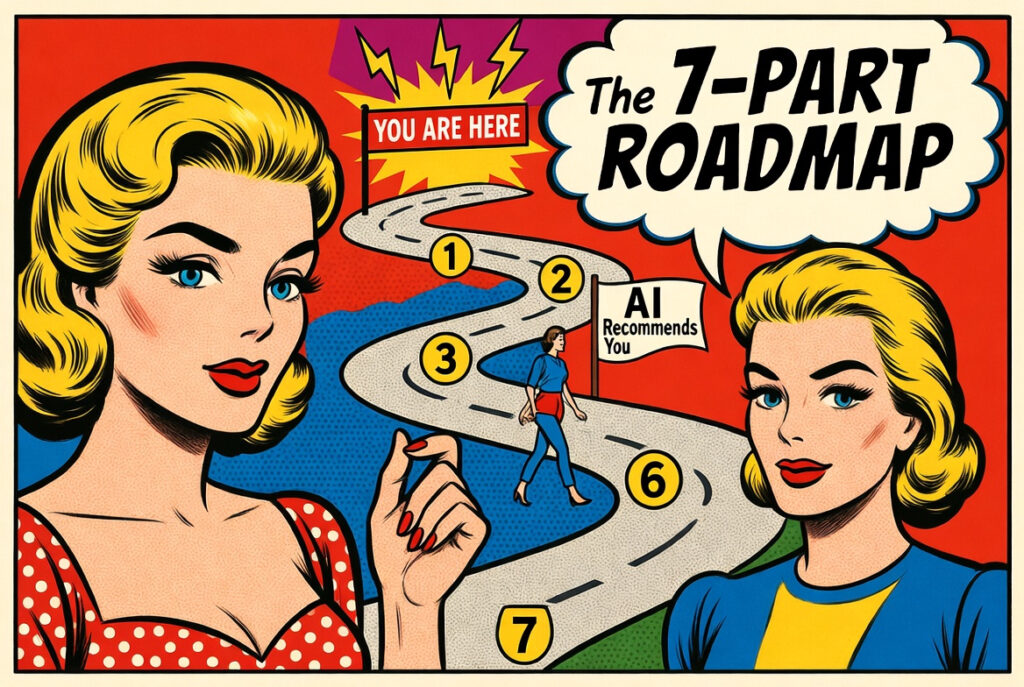
A step-by-step playbook that shows you exactly how to position your local business so AI recommends you. Period.
Here’s what you’ll get:
Most local businesses fail here because they don’t understand what changed.
You’ll learn how AI recommendation engines actually think, why traditional SEO is no longer enough, and why “ranking” matters less than being understood. You’ll see exactly how AI decides who gets named and who gets ignored — and why most businesses are invisible by default.
This section alone will save you from wasting thousands on strategies that worked in 2020 but are dead weight in 2026.
This is where most owners have their “oh no” moment.
You’ll uncover the specific reasons AI struggles to recognize local businesses — including inconsistent signals, vague positioning, and authority gaps. You’ll finally understand why having a website, Google profile, and social media still isn’t enough.
It’s like having all the ingredients for a great meal but never turning on the stove. Everything’s there. Nothing’s cooking.
Here’s where things flip in your favor.
You’ll learn how to structure your business’s online presence so AI can clearly explain who you serve, what problem you solve, why you’re credible, and where you operate.
This framework turns confusion into clarity — and clarity into recommendations. It’s the difference between mumbling your elevator pitch and delivering it like you’ve practiced it a thousand times.
Yes — you can influence how AI talks about your business.
This section breaks down how AI models learn from public data, structured content, citations, and consistency. You’ll see how to intentionally shape those signals so AI confidently mentions your business when customers ask for recommendations.
No coding. No black-hat tricks. Just alignment.
Think of it like teaching a new employee about your business. You wouldn’t just throw them in a room and hope they figure it out. You’d give them clear information, consistent messaging, and the tools to represent you properly. That’s exactly what you’re doing with AI.
Visibility doesn’t matter if it doesn’t convert.
Here you’ll learn how to turn AI-driven discovery into real phone calls, form fills, and bookings. This includes how customers behave differently when AI refers them — and how to structure your messaging so those leads trust you immediately.
Spoiler: AI-referred customers convert at a significantly higher rate than Google ad clicks. Because when a customer hears “ChatGPT recommended you,” they’ve already decided to trust you before they even pick up the phone.
This is where it all comes together.
You’ll see how local businesses can realistically generate 5-10 additional customers per month purely from AI recommendations — without ads, without chasing trends, and without burning time on platforms that don’t convert.
It’s not about going viral. It’s about being recommended. Consistently. Predictably. Month after month.
The Cautionary Tale of “Viral Vicky”:
Vicky spent six months trying to go viral on TikTok. She danced. She pointed at text. She did the trending audio thing. One video got 50,000 views. She got zero customers from it. Meanwhile, her competitor quietly optimized for AI recommendations and booked 8 new clients that month from people who asked ChatGPT for help. Vicky has great dance moves. Her competitor has great revenue.
AI isn’t slowing down. If anything, adoption is accelerating faster than anyone predicted.
This final section shows you how to stay visible as AI models evolve, how to adapt without rebuilding everything, and how to make sure your business doesn’t disappear as search continues to change.
This is long-term positioning — not a temporary tactic. The businesses that build this foundation now won’t need to panic every time a new AI platform launches. They’ll already be positioned.
While most local business owners are still arguing about whether to post Reels or TikToks, a small group of smart operators figured out something powerful:
You can actually influence what AI says about your business.
Not through hacking. Not through some shady trick that’ll get you penalized. Through strategic positioning that makes it easy — almost inevitable — for AI to recommend you.
These business owners are getting:
Inbound calls “out of nowhere” from customers who say “ChatGPT told me to call you.”
Leads they didn’t pay for, didn’t run ads for, didn’t beg for on social media.
A competitive moat that gets wider every single month they’re in the game early.
And here’s the thing that should really get your attention:
The early movers are building advantages that late arrivals will spend years trying to overcome.
This isn’t like SEO where you could jump in at any time and compete. AI models learn and reinforce patterns over time. The businesses that establish themselves now become the “default answers.” And once you’re the default answer, your competitor has to work ten times harder to displace you.
It’s like being the first gas station at a highway exit. Sure, someone else can build one later. But you’ve already got the traffic, the habit, and the reputation.
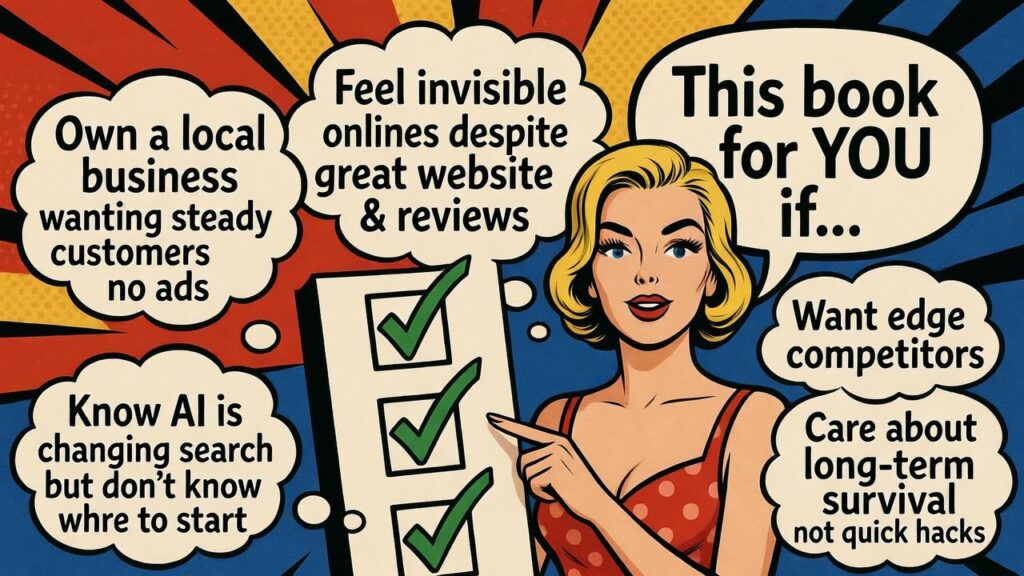
Let me save you some time. This book is for you if:
You own a local business and want consistent inbound customers without relying on ads that get more expensive every quarter.
You feel invisible online despite “doing everything right” — the website, the reviews, the social media, the SEO agency.
You know AI is changing how people find businesses, but you don’t know where to start or who to trust.
You want a strategic edge over every competitor in your city who hasn’t figured this out yet. (Spoiler: That’s almost all of them.)
You care about long-term business survival, not quick hacks that stop working next month.
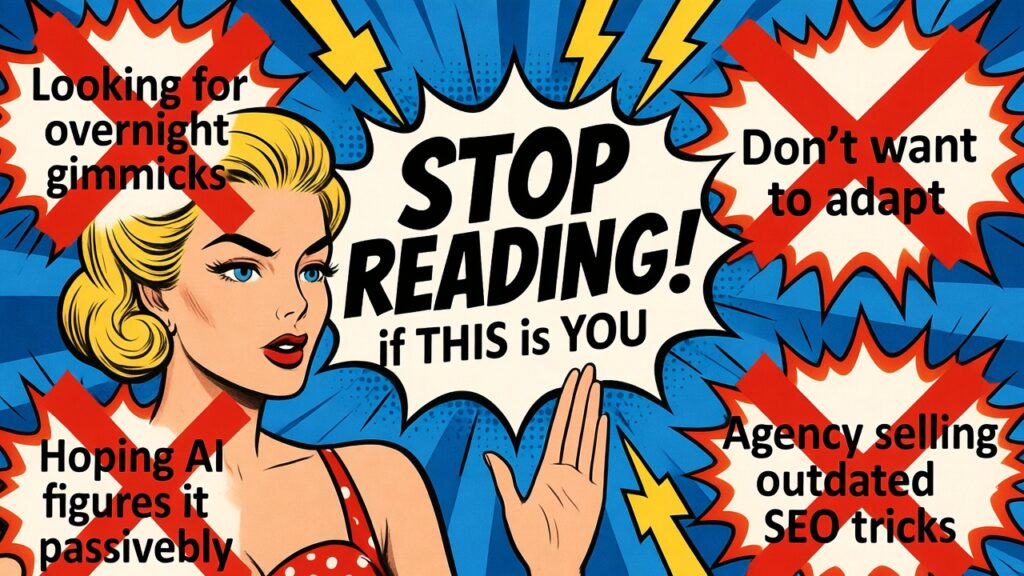
I want to be equally clear about who should stop reading right now:
If you’re looking for overnight gimmicks — this isn’t that. This is a system that builds over weeks and compounds over months.
If you don’t want to adapt — keep doing what you’re doing and hope for the best. (That’s a strategy too. Just not a good one.)
If you’re hoping AI will “figure it out eventually” and find your business on its own — it won’t. AI doesn’t reward passivity. It rewards clarity.
If you’re an agency selling outdated SEO tricks — this book might make your clients ask uncomfortable questions.
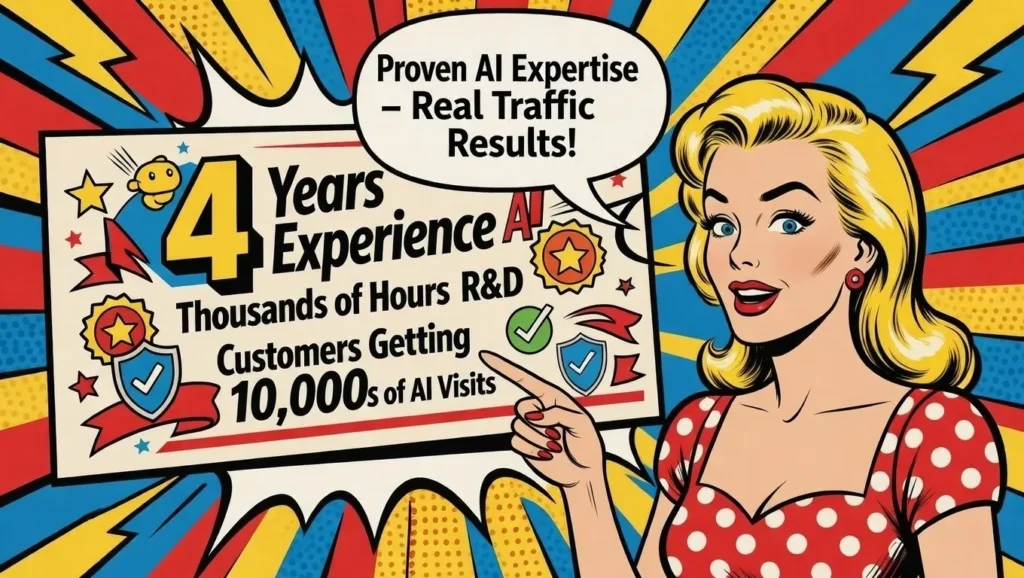
This book wasn’t written by someone who read a blog post about AI last Tuesday and decided to become an expert. Unfortunately there is a lot of that going around these days.
This comes from over 5 decades of combined digital marketing experience at iQ Marketers — a team that has worked with clients that have generated over $2 billion in leads.
We have been working with Ai for over four years.
We have been working with Answer Engine Optimization for two years, back when most people thought “AEO” was a typo.
We didn’t wait to see if AI search would matter. We new it would. We were already in the trenches figuring it out.
This playbook is built on:
Real client implementations across multiple industries and markets.
Strategies tested against ChatGPT, Grok, Claude, Gemini, Perplexity, and Google AI Overviews.
Results you can measure — not theories you can debate.
It also goes deep in to the into the fundamentals for AEO ranking. While at the same time giving you or your team and easy to follow step-by-step implimentation process.
The Answer Engine Dominance Framework™ is a comprehensive 5-pillar system for optimizing your website to be cited by AI search engines like ChatGPT, Grok, Perplexity, Google AI Overviews, and Claude.
Each pillar—Trust Architecture™, Content Intelligence™, Technical Excellence™, Schema Authority™, and Accessibility & AI Readability™—is scored 0-20 points (total: 100) and represents a critical component of AI citability.
The businesses that implement what’s in this book aren’t guessing. They’re following a system that works because it’s based on how AI actually processes information, forms recommendations, and influences buyer decisions today.
Not yesterday. Not theoretically. Today.
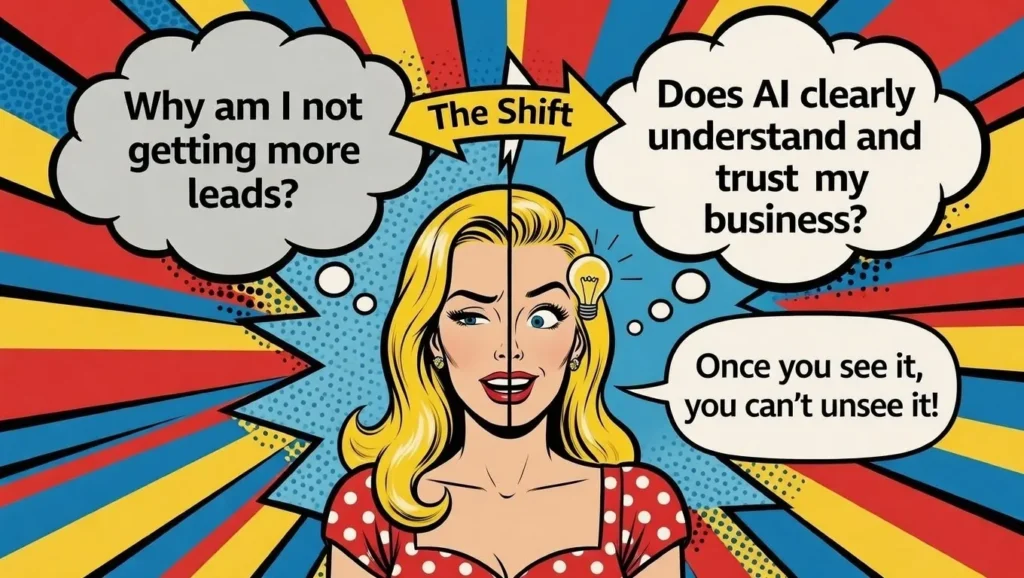
Fair warning: this book will ruin you.
Not in a bad way. In the way that once you understand how AI recommendations work, you can’t unsee it.
You’ll look at your website differently. You’ll look at your Google profile differently. You’ll look at your entire online presence differently.
Instead of asking, “Why am I not getting more leads?”
You’ll start asking, “Does AI clearly understand and trust my business?”
And once the answer is yes — the customers follow. Not because of luck. Not because of an algorithm change. Because you positioned yourself to be the obvious answer.
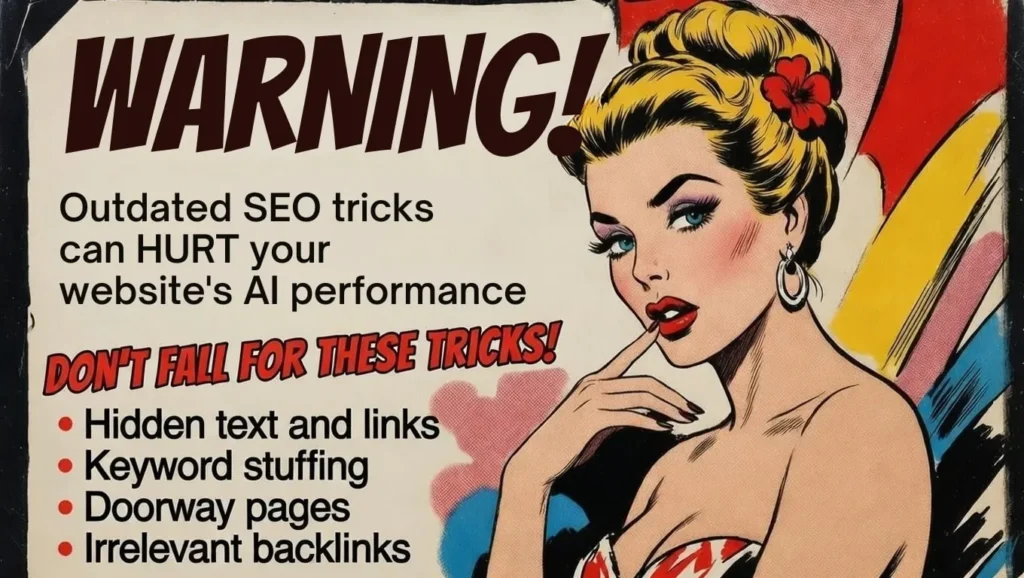
You will see and understand why these old SEO tricks no longer work for AI and even now SEO!
You will be able to ignore the hugsters that are still pushing this, and perhaps undo these things if they were done to your site!
You will be able to focus on what really works not for just AI, but for your new potential customers as well!
Once you understand the process, it is EASY!
Here’s the deal. And I’m going to make it simple because I respect your time.
Read the book. Apply the framework. Give it an honest effort.
If you don’t walk away with a clear understanding of why ChatGPT can’t find you –and exactly how to fix it – you don’t pay.
No hoops. No fine print. No “well, you didn’t fill out form 7B so the guarantee is void.”
If the book doesn’t deliver, you get your money back. Period.
Why would I make that offer? Because I’ve seen what happens when business owners actually implement this system. They don’t ask for refunds. They ask how they can do more.
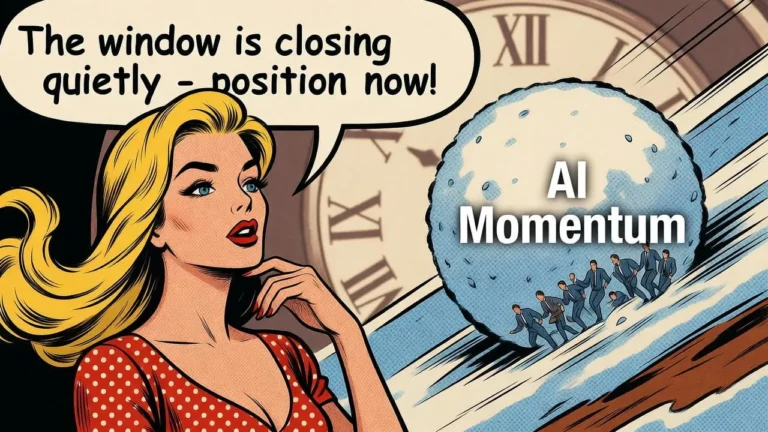
Here’s the thing about AI recommendations that most people don’t understand:
It’s not a light switch. It’s a snowball.
The businesses that position themselves now build momentum. AI learns their patterns, reinforces their authority, and recommends them more confidently over time. That momentum compounds.
Which means every month you wait, the gap between you and your competitors who’ve already started gets wider. Not by a little. By a lot.
Six months from now, you’ll either be one of the businesses AI recommends by default — or you’ll be trying to figure out why your competitor is suddenly booked solid while your phone gets quieter.
The information is right here. The system is proven. The guarantee removes the risk.
The only real question is:
When someone in your city asks AI “who should I call?” — will it be your name that comes up? Or will it be your competition’s?
It will not be both…
Get access now.
Download “ChatGPT Can’t Find You.”
Position your business for AI recommendations.
Get started on your way to receiving 5-10 new customers per month.
Price is just $19!
Fair warning: this book will ruin you.
Not in a bad way. In the way that once you understand how AI recommendations work, you can’t unsee it.
You’ll look at your website differently. You’ll look at your Google profile differently. You’ll look at your entire online presence differently.
Instead of asking, “Why am I not getting more leads?”
You’ll start asking, “Does AI clearly understand and trust my business?”
And once the answer is yes — the customers follow. Not because of luck. Not because of an algorithm change. Because you positioned yourself to be the obvious answer.
Fair warning: this book will ruin you.
Not in a bad way. In the way that once you understand how AI recommendations work, you can’t unsee it.
You’ll look at your website differently. You’ll look at your Google profile differently. You’ll look at your entire online presence differently.
Instead of asking, “Why am I not getting more leads?”
You’ll start asking, “Does AI clearly understand and trust my business?”
And once the answer is yes — the customers follow. Not because of luck. Not because of an algorithm change. Because you positioned yourself to be the obvious answer.
Fair warning: this book will ruin you.
Not in a bad way. In the way that once you understand how AI recommendations work, you can’t unsee it.
You’ll look at your website differently. You’ll look at your Google profile differently. You’ll look at your entire online presence differently.
Instead of asking, “Why am I not getting more leads?”
You’ll start asking, “Does AI clearly understand and trust my business?”
And once the answer is yes — the customers follow. Not because of luck. Not because of an algorithm change. Because you positioned yourself to be the obvious answer.

PS: AI isn’t “the future of search.” It IS search now in 2026. And local businesses that don’t adapt won’t get a warning. They’ll just stop getting calls. One quiet month at a time.
PPS: The earlier you position yourself correctly, the harder it becomes for competitors to catch up. First-mover advantage in AI recommendations is real, measurable, and growing every day. “ChatGPT Can’t Find You” shows you how to move now — while most local businesses are still asleep.
PPPS: Still thinking about it? Go ask ChatGPT right now: “Who’s the best [your business type] in [your city]?” If your name doesn’t come up — you already know you need this book.